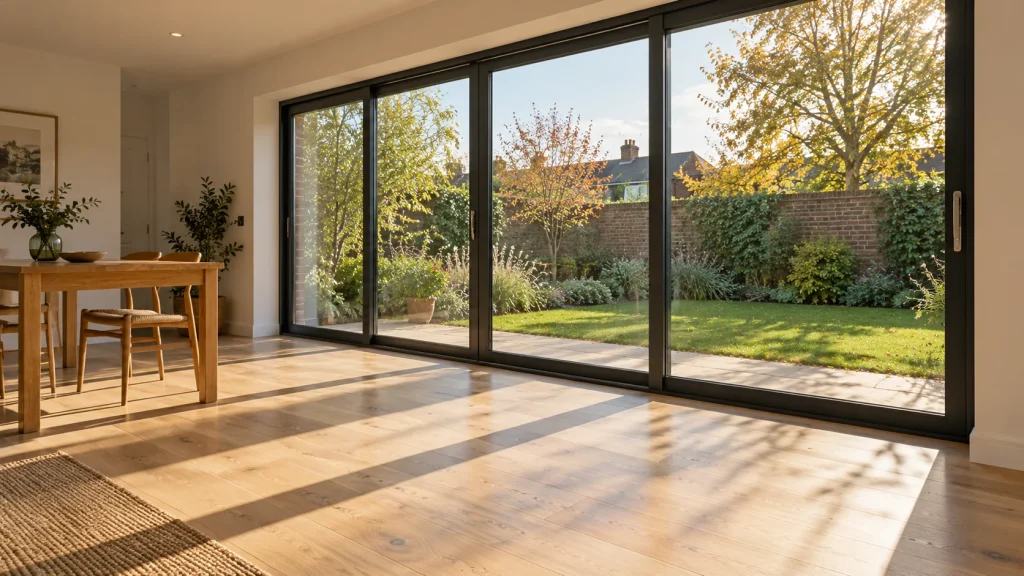
If your extension has failed an Area Weighted U-value calculation (AKA Heat Loss Calculation), you might be facing a choice between less glazing and more insulation. Before changing the plans, there’s another option worth considering: a whole house SAP comparison.
The same extension can fail the Area Weighted check and pass SAP without any changes to the design or the existing house. One important reason is the heat that comes in through the glass.
Why has the heat loss check failed?
An Area Weighted U-value calculation compares the fabric of your proposed extension with a reference extension of the same size and shape. It considers the areas and U-values of the walls, roof, floor and openings together.
Glazing generally loses more heat than an insulated wall. As the glazed area increases beyond the reference allowance, the proposed extension can lose more heat through its fabric than the reference design. Better insulation or lower glazing U-values can help balance that difference.
But this comparison doesn’t account for solar heat entering through the glass. That’s where SAP can give a different result.
Your glazing brings heat in too
Think about a room warming up when the sun shines through the windows. That is solar gain. During the heating season, some of that warmth can reduce the work your heating system needs to do.
SAP accounts for useful solar gains when calculating heating demand. The window area, direction it faces, shading and the glass’s g-value affect the contribution. The g-value describes how much solar energy passes through the glazing, whereas its U-value describes heat loss. SAP 10.2 explains this in sections 6 and 9.
Less glazing in the reference extension
For a whole house SAP comparison, we model your home with the proposed extension and compare it with the same home plus a reference extension. That reference extension has the standard fabric specification and its openings are limited to the permitted allowance, including qualifying existing openings covered by the extension.
Your proposed extension may have more glazing, so it can receive more solar heat as well as lose more heat through the fabric. SAP accounts for both effects. The Area Weighted method only considers the fabric side of that balance.
This is why a design can fail the simpler check but still work in SAP. In our experience, extensions with reasonable insulation and glazing specifications often pass this comparison without changes to the existing house.
For projects in England using the 2021 Part L standards, including the 2023 amendments, this comparison is described in Approved Document L, paragraph 10.10.
Does that mean more glass is always better?
No. Additional glazing brings additional heat loss, and the useful solar gains won’t always make up for it. South-facing glazing generally receives more solar heat than north-facing glazing. SAP also limits how much of the incoming heat counts as useful, so doubling the glazing doesn’t simply double the benefit.
The calculation checks the balance for your particular design. A SAP comparison needs to satisfy the primary energy, carbon emissions and fabric energy efficiency measures; solar gains alone aren’t a guaranteed pass.
Which calculation should you choose?
The Area Weighted method remains a useful, simpler way to demonstrate compliance where the extension’s fabric performs well enough. If it passes, a whole house SAP comparison isn’t needed just to account for the extra glazing. You can check your design with our free Area Weighted U-value calculator using your measurements and calculated U-values.
If it fails, whole house SAP calculations for your extension can establish whether the design already works once useful solar gains are included. Assessing the whole house doesn’t automatically mean upgrading it.
Before spending money changing a specification, send us your plans and any existing heat loss calculation. We can review the result and advise whether a SAP comparison is worth pursuing.